



THE VOICE
MICROFINANCE
We promote microfinance as a tool to overcome social and financial exclusion.
EMN
Conference 2026
Join us in Barcelona, Spain, from 14-16 October 2026, for insightful discussions and networking.
Resilience
Financial Health
Supporting vulnerable entrepreneurs through economic challenges.
European
Highlighting the impact of microfinance on social and economic inclusion since 2014.
Peer-to-Peer
visits
Exclusive for EMN members to explore best practices and deepen expertise on key themes
Latest opportunities
MICROFINANCE
Discover open calls for proposals, applications, and expressions of interest in the microfinance sector
Shaping the future of microfinance
Our work
Advocacy
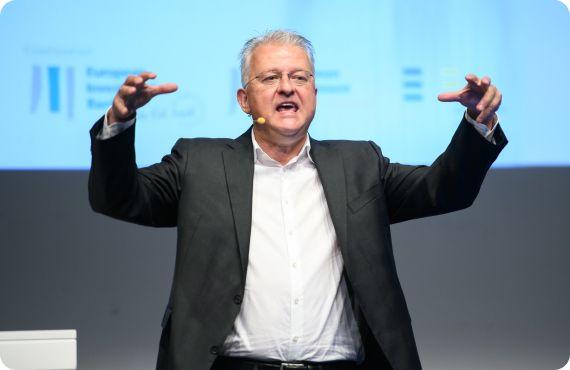
The development of microfinance in Europe has encountered many legal and political obstacles. It is therefore important that the European Microfinance Network be strongly involved in advocacy on a wide range of issues related to microfinance, micro-enterprises, social and financial exclusion, self-employment and employment creation.

Knowledge Exchange
The peer-to-peer exchange visits, exclusively intended for EMN members, provide each EMN member with the opportunity to visit another member on a specific theme, in order to deepen the understanding of their work, to encourage exchange of good practices and to develop expertise. These bilateral exchanges, tailor-made to members’ needs and expectations, also facilitate cooperation and collaboration between EMN members.
Research
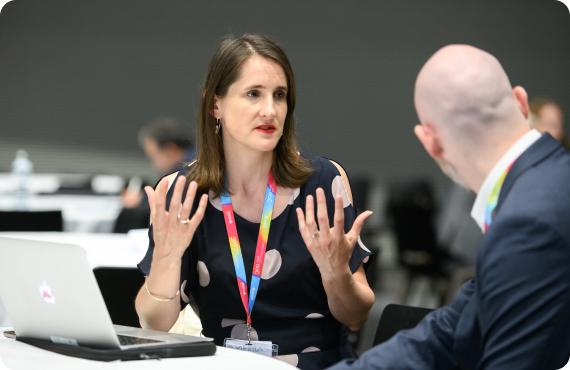
The development of microfinance in Europe has encountered many legal and political obstacles. It is therefore important that the European Microfinance Network be strongly involved in advocacy on a wide range of issues related to microfinance, micro-enterprises, social and financial exclusion, self-employment and employment creation.
Working Groups
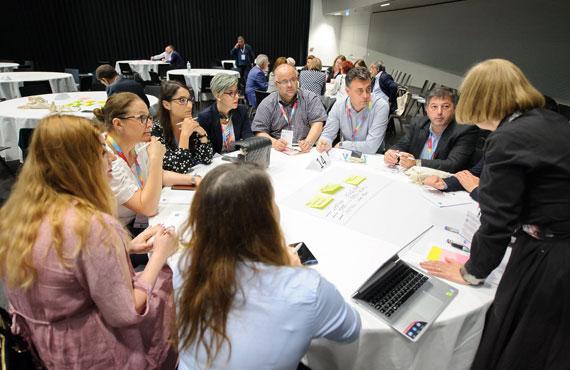
EMN organises Working Groups to strengthen the involvement of its members in the Network. The activities carried out by the different Working Groups are very diverse: organisation of workshops, elaboration of research papers, publications, creation of new tools for microfinance management, etc.
Discover who we are
About us
European Microfinance Network is an NGO that connects microfinance institutions, social finance organizations, and other stakeholders throughout Europe (EU and candidate countries). Since 2003, with the help of members from EU countries and candidate countries, EMN has played an important role in cultivating collaboration, encouraging innovation, and knowledge sharing across the microfinance ecosystem. We partner with EU institutions like the EIF and EIB, as well as corporations, to implement projects across Europe. EMN, together with other partners, also developed the Code of Good Conduct to ensure high standards in microfinance operations and protect clients’ interests.
Stay updated with our latest happenings
Upcoming Events
SIFTA webinar on Financial health and resilience
Share this event





The future of microfinance is stronger together
Our network
We are proud to have 95 members from 23 countries, including EU and candidate countries. Among these, 27 organizations follow the Code of Good Conduct, showcasing their dedication to high standards in microfinance. Inside EMN there are 11 national networks that are focused on advocating for microfinance as a tool for overcoming social and financial exclusion. Inside of EMN members are collaborating across regions in project consortia and also establish partnerships between themselves for developing dedicated financial products.
EMN amplifies its support for its members through partnerships with companies offering tailored value, enabling the creation of customized events and services. Members also receive assistance from EMN in applying for SIFTA technical support, organizing study visits, and obtaining the COGC. Additionally, EMN offers its support and knowledge to members in conducting research on specific needs, like impact assessments, ensuring they are well-equipped to thrive in the evolving microfinance landscape.
Explore our latest news
Latest news
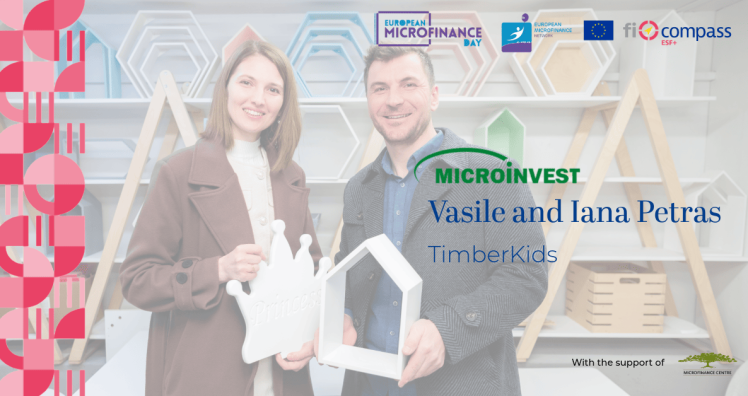
In the heart of the Petras family, a new business idea was born, fueled by the desire to create practical and safe furniture for children. Vasile and his wife, who previously owned a furniture manufacturing business, found inspiration in the arrival of their child. As his wife began her quest for suitable furniture for their little one, Vasile took it upon himself to design and build small tables, feeding chairs, and other furniture tailored for children.
This hands-on experience resonated deeply with the couple, aligning closely with their family values and aspirations. Thus, in 2020, TimberKids was founded. Over the past six years, the business has experienced significant growth, continually recognizing the importance of family-oriented design in the furniture industry.
TimberKids specializes in producing a wide range of children’s furniture and accessories, including tables, chairs, beds, learning towers, Pikler triangles, and toy storage solutions. Each product is crafted with care, keeping in mind the practical needs of children’s rooms.
However, like many businesses, TimberKids faced challenges during the pandemic. The uncertainty of the economic landscape posed a threat to its operations, and the search for financial support proved difficult, as many institutions adopted a more cautious approach. In this moment of need, TimberKids turned to Microinvest, seeking not only financial assistance but also understanding and trust.
Microinvest responded by providing TimberKids with the necessary financing, marking the start of a fruitful partnership. This collaboration extended beyond mere financial support; it also included a personalized approach that took into account the unique needs of the business. TimberKids benefited from swift decision-making, transparent communication, and financial solutions tailored to its specific developmental stage.
As the years progressed, the relationship blossomed into a long-term partnership that empowered TimberKids to confidently plan investments, diversify its product range, and pursue sustainable growth. Today, the company boasts more than 500 products, serving families across the country and solidifying its position in the local market.
Looking towards the future, TimberKids has ambitious plans to further expand its offerings, invest in production capabilities, and reach an even broader customer base. The driving goal remains constant: to create safe, practical, and high-quality products that support children’s development and ease everyday family life.
Microinvest’s support has been crucial in helping TimberKids navigate a period of economic uncertainty while pursuing its growth objectives. Beyond providing financial assistance, this partnership has fortified a local family-owned business that not only creates meaningful products for children but also contributes positively to the local economy.
The journey of TimberKids exemplifies the profound impact that access to responsible finance can have on entrepreneurs. It showcases how such support can help businesses maintain continuity, adapt to challenges, and create lasting social and economic value for their communities.
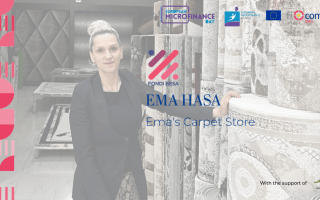
In the heart of a bustling community, Ema’s carpet store stands as a testament to resilience, hard work, and the profound impact of supportive partnerships. As she reflects on her journey, it becomes clear that the road has not always been smooth, but the help she received from Fondi Besa has been pivotal in transforming her challenges into triumph.
Ema’s story begins with her mother-in-law, who laid the foundation of their family carpet business three decades ago. After her passing, Ema found herself at a crossroads, compelled to leave her successful hair salon to keep the family business alive. “It was a difficult transition,” she admits, “but I knew it was important to continue what my mother-in-law had built.”
Facing the daunting task of renovating an old shop while managing the business finances proved overwhelming. Ema sought support through Fondi Besa, an institution she previously turned to for her hair salon. “I had taken my first loan from Fondi Besa, and they were quick to respond,” she says. “Their professional team made the process smooth and stress-free.”
With Fondi Besa’s financial assistance, Ema was able to renovate her shop, creating a vibrant and inviting space that showcased the beauty of the carpets. This renovation not only attracted more customers but also revitalized the family’s commitment to the business. “The improvements allowed us to display the carpets more effectively, making them more appealing to potential buyers,” she notes.
As the years progressed, demand during holidays and special occasions prompted Ema to seek additional loans to stock up on inventory. Through it all, Fondi Besa has remained a steadfast ally, allowing her to make timely investments while ensuring she could repay her loans in manageable periods. “Their quick response times and excellent communication have made a significant difference for us,” Ema emphasizes. “I wouldn’t consider working with anyone else.”
Beyond the loans and renovations, the relationship with Fondi Besa has instilled a sense of trust and stability in Ema’s family business. “Our journey with Fondi Besa is built on trust—one that we have never broken,” she shares proudly. This trust has allowed Ema to focus on what matters most: ensuring that her children learn the values of hard work and dedication by participating in the family business.
By empowering her children to engage in the work, Ema instills in them the same principles that have guided her family for generations. “It’s essential for them to understand that success requires effort and commitment,” she explains. The family unit is ultimately strengthened by their shared experiences and aspirations.
Today, not only does Ema’s business thrive, but it also provides a comfortable life for her family and an education for her children. They have cultivated a strong bond through their collective efforts, with Fondi Besa playing a crucial role in their achievements. “We have sacrificed and worked hard, but we cannot forget to dedicate a part of our success to the precious support of Fondi Besa,” Ema reflects with gratitude.
In showcasing Ema’s story through the #EMD26 campaign, we highlight the importance of fostering relationships that empower individuals and elevate communities. Fondi Besa’s commitment to supporting family businesses like Ema’s creates pathways for growth, resilience, and success, ensuring that dreams can flourish through hard work and trust.
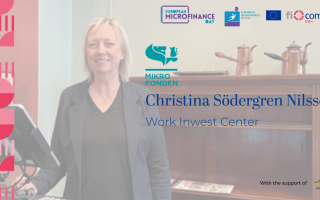
Work Inwest Center, a Work Integration Social Enterprise, has recently navigated a challenging financial period with the assistance of Mikrofonden Sverige. Christina Södergren Nilsson, a business developer at the center, highlighted that the financial support not only provided much-needed stability but also allowed the organization to explore new development opportunities, particularly in the area of construction recycling.
Established with a dual focus, Work Inwest Center offers job training for individuals distanced from the labor market while managing a range of businesses, including a bicycle repair shop, a lunch restaurant featuring its own micro-bakery, and various cleaning and property services. However, in 2025, the organization faced a setback when it lost a contract related to emergency housing, which significantly impacted its financial situation. The loan secured from Mikrofonden became a pivotal tool, enabling the center to secure its operations, retain its workforce, and continue moving forward with ambitious plans for the future.
“We have 14 employees, and it is always a vulnerable situation,” Södergren Nilsson remarked. “2025 was a tough year in many ways, yet we wanted to continue forward and invest in new opportunities. A financial buffer was needed. The loan provided us with robust security and encouraged us to make investments.”
Now, Work Inwest Center is poised to embark on an exciting new venture in construction and recycling, marking a significant expansion into a completely new niche. Södergren Nilsson expressed enthusiasm for this initiative: “We are entering something new and exciting. We will play a central role in a project to build a facility dedicated to recycling construction materials. Our aim is to collaborate extensively across Bohuslän and Dalsland counties, utilizing materials from both private individuals and businesses.”
Thanks to the financial backing from Mikrofonden Sverige, Work Inwest Center is in a strong position to sustain its diverse activities without compromising its development. The organization has successfully taken important steps toward a brighter future. “It is very encouraging that Mikrofonden exists to support social enterprises and cooperatives,” Södergren Nilsson stated. “The guarantee and the loan have enabled us to continue our community involvement and broaden the labor market for individuals who are currently outside of it.”
With a renewed sense of purpose and security, Work Inwest Center is looking ahead to promising opportunities in the realm of construction recycling, while continuing its vital work in job training and community support.
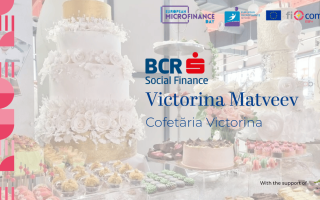
In the heart of Satu Mare, a remarkable story unfolds, showcasing resilience, ambition, and culinary artistry through the achievements of Victorina Matveev. Her journey from a student at the Police Academy to a successful entrepreneurial figure in the pastry world is both motivational and inspiring.
Victorina faced significant challenges early in her life. In her third year at the Police Academy, she experienced the heartbreaking loss of her father. With her mother struggling with illness and tuition fees looming, she made the brave decision to work abroad. This choice not only provided financial support for her family but also set her on the path that would ultimately lead to her success.
Her initial foray into the workforce came at a pastry shop, a serendipitous opportunity that ignited a passion for confectionery and baking. Over the course of 13 years, Victorina honed her skills, perfecting her recipes and techniques, which fostered a deep commitment to her craft. Six years ago, she returned to Romania with a compelling goal: to establish her own pastry shop and share her rich experience with her homeland.
To pave the way for her new venture, Victorina participated in the renowned Romanian cooking show “Chefi la Cutite.” Her impressive performance, reaching the semi-finals, not only showcased her culinary talent but also provided a significant boost to her visibility and credibility. This exposure laid the foundation for launching her pastry laboratory, driven by her desire for financial independence and a passion for creating beautiful desserts.
Cofetăria Victorina soon became a beloved destination in Satu Mare, where customers are greeted by the irresistible aromas of vanilla, cocoa, and fresh fruits. Every creation, from elegant eclairs to modern desserts, reflects her artistry and dedication. The shop has gained a reputation not just for its exquisite cakes and pastries, which cater to a variety of tastes, but also for its warm and inviting atmosphere that draws in sweet lovers from near and far.
Despite facing obstacles, including difficulty accessing traditional bank financing due to a lack of credit history and real estate collateral, Victorina’s determination shone through. With strategic financial support, she was able to acquire the necessary equipment to expand her offerings, allowing her to diversify her products and solidify her business’s stable cash flow.
Today, Cofetăria Victorina stands among the most highly regarded pastry shops in Satu Mare County, a testament to Victorina’s unwavering perseverance and talent. Her success has not only transformed her life but also contributed to the local economy by creating job opportunities and enhancing the culinary landscape of the region.
Looking towards the future,Victorina is considering expanding her operations to neighboring counties, further cementing her legacy in the Romanian pastry scene. Her journey is an inspiring reminder that with hard work, passion, and resilience, it is possible to rise above adversity and achieve one’s dreams. In every cake she crafts, Victorina not only fulfills her own ambitions but also brings joy and sweetness to countless others.
Explore our latest publications, reports, and insightful studies
Latest publications

Adie Annual_Report_2025.pdfADIE’s Annual Report 2025
Adie is Franceʼs leading nonprofit network, supporting entrepreneurs who do not have access to traditional bank credit. It relies on a nationwide presence built on its 209 branches and 320 outreach hubs, the expertise of 926 employees, and the dedication of more than 1,300 volunteers and experts.
In 2025, Adie financed and supported more than 30,000 entrepreneurs, contributing to the creation or preservation of 22,000 jobs. Thanks to the commitment of our teams and the support of our partners, a wide range of projects came to life: local businesses, service, innovative activities, and solidarity-based initiatives. Every support programme is designed to strengthen the entrepreneurʼs autonomy and local impact in keeping with the principles of solidarity and sustainability that have guided our work for more than 35 years.
Annual report
Join our community and contribute to financial inclusion
Join the community

Conference discount

Access to personalized solutions

EU policy involvement

Advocacy involvement

Early access to EU consortiums

First-hand policy news

Expand professional connections

Access to microfinance investors

Brand leverage